
Runtime & containers
Define how application services run, connect and receive configuration across environments.
XTND includes infrastructure architecture for runtime, provisioning, orchestration, networking, metering and disaster recovery. Xstudios can connect those concerns to the application delivery and use Hosting-Shop infrastructure where it fits the project.
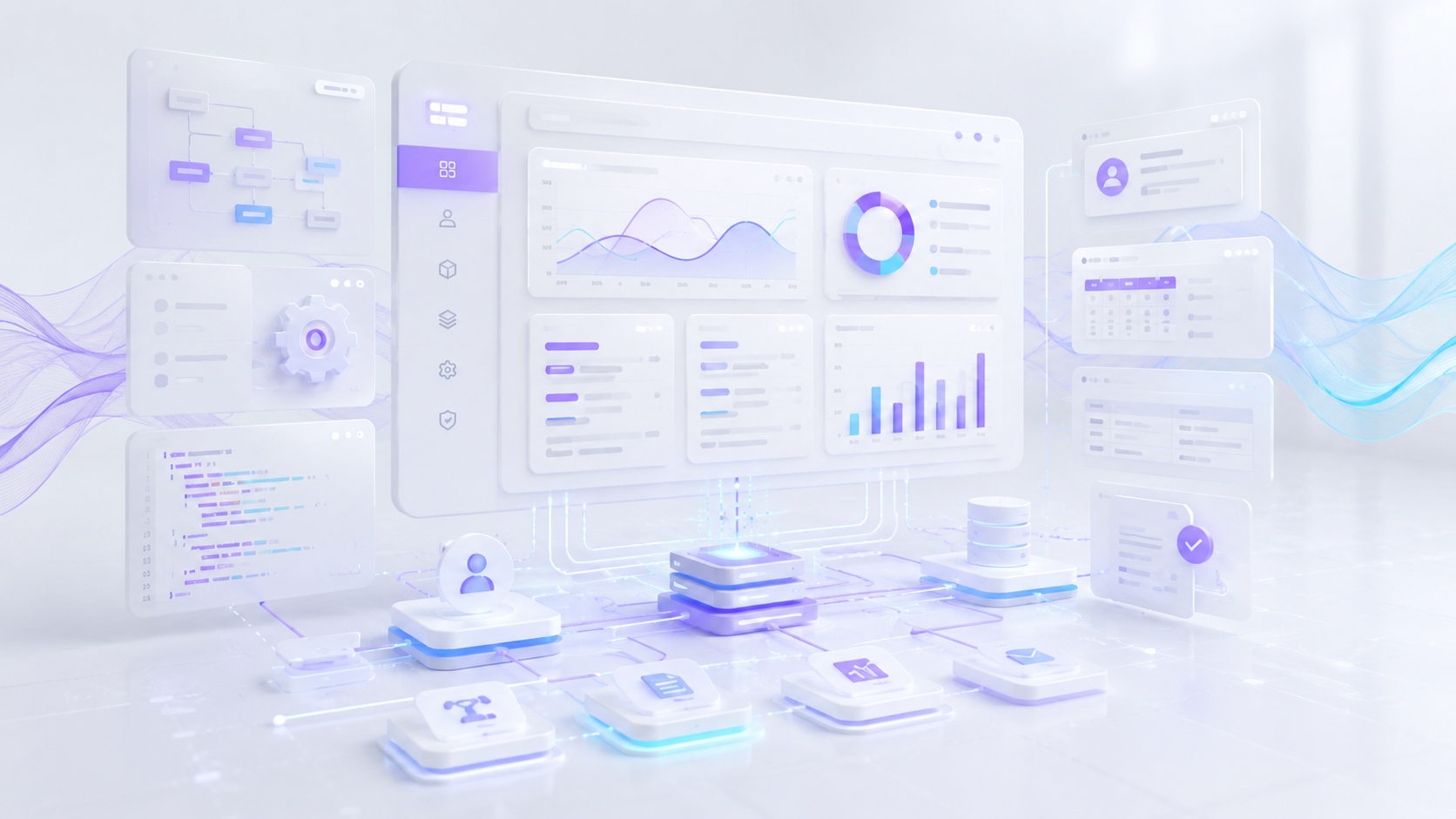
XTND includes infrastructure architecture for runtime, provisioning, orchestration, networking, metering and disaster recovery. Xstudios can connect those concerns to the application delivery and use Hosting-Shop infrastructure where it fits the project.
Define how application services run, connect and receive configuration across environments.
Plan repeatable environment creation and deployment rather than relying on manual server setup.
Design internal/external connectivity, routing and environment boundaries around the application topology.
Include health, metrics, logs and operational visibility so production behavior can be understood.
Set backup, restore and recovery expectations based on business impact rather than vague “daily backup” promises.
Use Xstudios/Hosting-Shop hosting and cloud services as the operational layer when that provides the right ownership and support model.
Hosting & cloudXstudios translates the XTND platform model into a scoped solution with explicit ownership, integrations, acceptance criteria and production responsibilities.
A marketing website, an internal tool and a multi-tenant SaaS platform do not need the same runtime. Xstudios chooses an infrastructure shape based on availability, isolation, data, cost, deployment frequency and who will operate it after launch.
XTND infrastructure gives a broader orchestration model for projects that need it, while Hosting-Shop can provide the practical hosting and cloud layer. Simpler projects can remain simpler.
The infrastructure domain is broad and evolving. Xstudios uses suitable runtime and deployment capabilities for the project instead of claiming every internal provider/orchestrator module as a finished managed-cloud product.
The exact phases change with the project, but we keep the delivery model explicit so reusable platform depth does not become an opaque dependency.
Understand traffic, state, data sensitivity, availability and operational responsibility.
Select shared, dedicated, containerized or other suitable infrastructure patterns.
Create repeatable deployment, configuration and rollback paths.
Monitor health, protect data and prove the recovery path appropriate to the service.
Availability and implementation depth are confirmed against the actual project scope and current XTND capability maturity.
No. Hosting-Shop is a natural option when Xstudios is also responsible for ongoing operations, but the architecture can integrate with other suitable environments.
Yes, when isolation, performance, compliance or operational ownership justifies it.
Those can be included in the infrastructure/managed-service scope, with retention, monitoring depth and recovery objectives defined explicitly.
Yes. SaaS and white-label projects are strong candidates for repeatable environment, configuration and deployment design.
Xstudios can map your requirements against the current XTND platform, identify what is reusable today and define where custom engineering or external systems remain the better choice.