
CRM & customer operations
Lead, customer, account and service workflows adapted to the sales or relationship model.
- Customer profiles
- Pipeline/workflow states
- Activity and communication context
Xstudios develops portals, dashboards, operational systems, APIs and automation workflows that remove repetitive steps, connect data and give your team a clearer way to run the process.
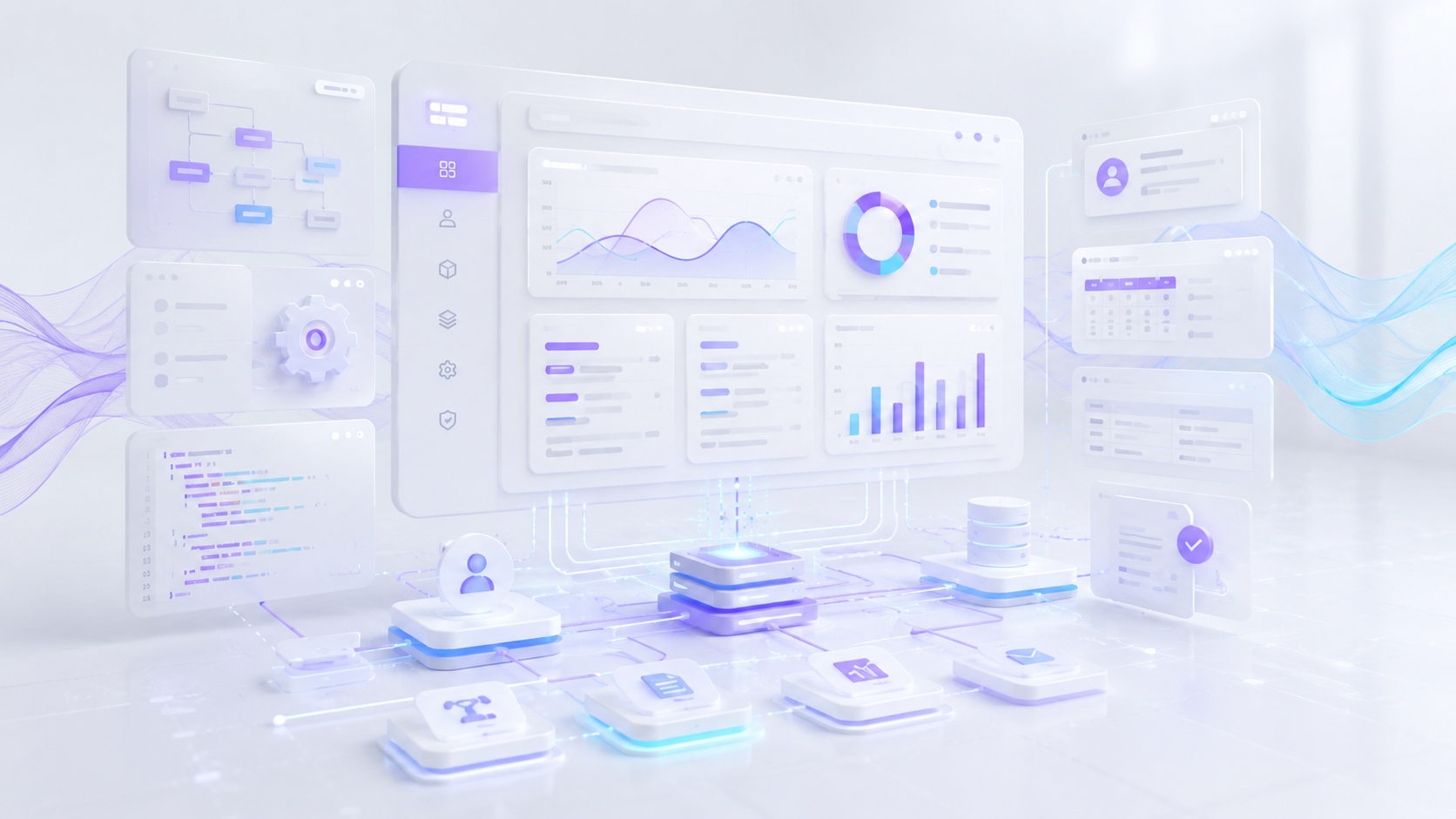
CRM, ERP, CMS, invoicing and administration are useful labels, but the real value comes from modelling your workflow, data ownership, roles and exceptions correctly. We start there, then build only the screens and automation the process needs.
Lead, customer, account and service workflows adapted to the sales or relationship model.
Purpose-built operational workflows for projects, resources, tasks, approvals or domain-specific processes.
Structured content systems for websites, portals, knowledge or internal publishing needs.
Invoicing, documents, approvals and admin workflows integrated with the systems already in use.
Customer, partner, employee or supplier surfaces that expose the right actions and information to each role.
Operational views that combine the data needed to act, rather than simply reproducing database tables.
Automation can handle predictable rules and repetitive handoffs, while AI can assist with tasks such as classification, extraction, summarization or drafting. We design approval points, permissions and auditability around the business risk so faster work does not mean less control.

A useful application rarely works alone. We design API boundaries, identity, synchronization, error handling and sources of truth so the new software fits the wider operating environment instead of creating another disconnected database.
REST/API clients, webhooks, imports and controlled synchronization with third-party systems.
Define who can act, in which organization/context, and what data or actions each role can reach.
Explicit sources of truth, lifecycle rules and safe handling of synchronization failures.
Plan environments, configuration, secrets, backups and monitoring with the application architecture.
Protect important flows with automated or repeatable checks before changes reach production.
Record key decisions, integration contracts and operational steps so the system remains supportable.
XTND can provide reusable platform capabilities for connected workflows, content, identity, automation and multi-client/operator scenarios. We evaluate it when those capabilities match the problem; we keep custom implementation where the business needs a differentiated workflow or experience.
Purpose-built application and integrations when the workflow is unique or ownership/control requirements favor a dedicated system.
Discuss custom softwareConfigure and extend reusable platform modules when they already map well to the operating model.
Build with XTNDUse a custom front end or domain workflow while reusing XTND for shared platform concerns underneath.
Plan a hybrid architectureWe prefer phased implementation with explicit scope boundaries, testable acceptance criteria and evidence around risky changes instead of a long “big bang” build.
Map actors, states, inputs, outputs, permissions and business rules.
Validate the riskiest integration or workflow before expanding the build.
Add features in controlled slices with regression protection and review.
Document deployment, monitoring, backups and ongoing change responsibility.
Custom software is most valuable when it removes repeated work, connects information and gives the right people a clearer operating surface. We can deliver a focused internal tool, a customer portal or a larger business application in controlled phases.
Translate real operating steps, exceptions, roles and data ownership into a delivery scope the team can validate.
Plan the applicationDefine services, databases, APIs, sources of truth and integration boundaries so the application can evolve without hidden coupling.
Architecture reviewDesign authentication, roles, permissions and data boundaries for internal teams, customers, partners or multi-client scenarios.
Discuss access modelConnect external services and existing systems using APIs, webhooks, scheduled synchronization or controlled import/export flows.
Integration workCombine deterministic automation with AI-assisted classification, drafting, extraction or decision support where human control and context are explicit.
Automation optionsProtect important behavior, phase releases, migrate data carefully and modernize inherited code without turning every improvement into a rewrite.
Modernization optionsCustom software can range from a focused integration to a multi-phase operational platform. The entry engagements below make it possible to validate scope and risk before committing to a larger build.
Review an existing application, architecture or workflow and turn the problem into a practical implementation roadmap.
For one important feature, integration, automation or contained modernization problem that can be delivered as a focused engagement.
For portals, CRM/ERP workflows, dashboards, customer areas, automation systems and other purpose-built software where scope determines the investment.
For products that need recurring development capacity, architecture decisions, integrations, maintenance and a managed backlog.
Applications normally intersect identity, APIs, data, automation, hosting and ongoing support. Xstudios can custom-build the differentiating workflow while reusing XTND platform capabilities where that is the faster and more maintainable choice.
Define the right scope, data boundaries and modernization plan before committing the build.
ConsultingCreate public websites, portals and customer-facing interfaces around the application.
Web designReuse connected modules for business domains, content, identity, automation, productization and operator scenarios.
Visit XTNDUse contextual AI, Smart Relay and automation capabilities where the workflow benefits from governed platform-level execution.
XTND AICoordinate runtime requirements with Cloud Hosting or other Hosting-Shop services when appropriate.
Cloud HostingMaintain, monitor, modernize and extend the application after the initial delivery.
Ongoing supportDescribe the people involved, the information moving between them and the points where work stalls or gets duplicated. That is usually enough to identify an automation or application opportunity.