
Context & RAG
Assemble task-specific context from selected files, records, knowledge or data sources rather than sending every model the same prompt.
XTND contains a broad AI Factory alongside execution and communication-automation layers. Xstudios can combine the relevant pieces into practical flows for documents, messages, support, internal knowledge, operations and integrations.
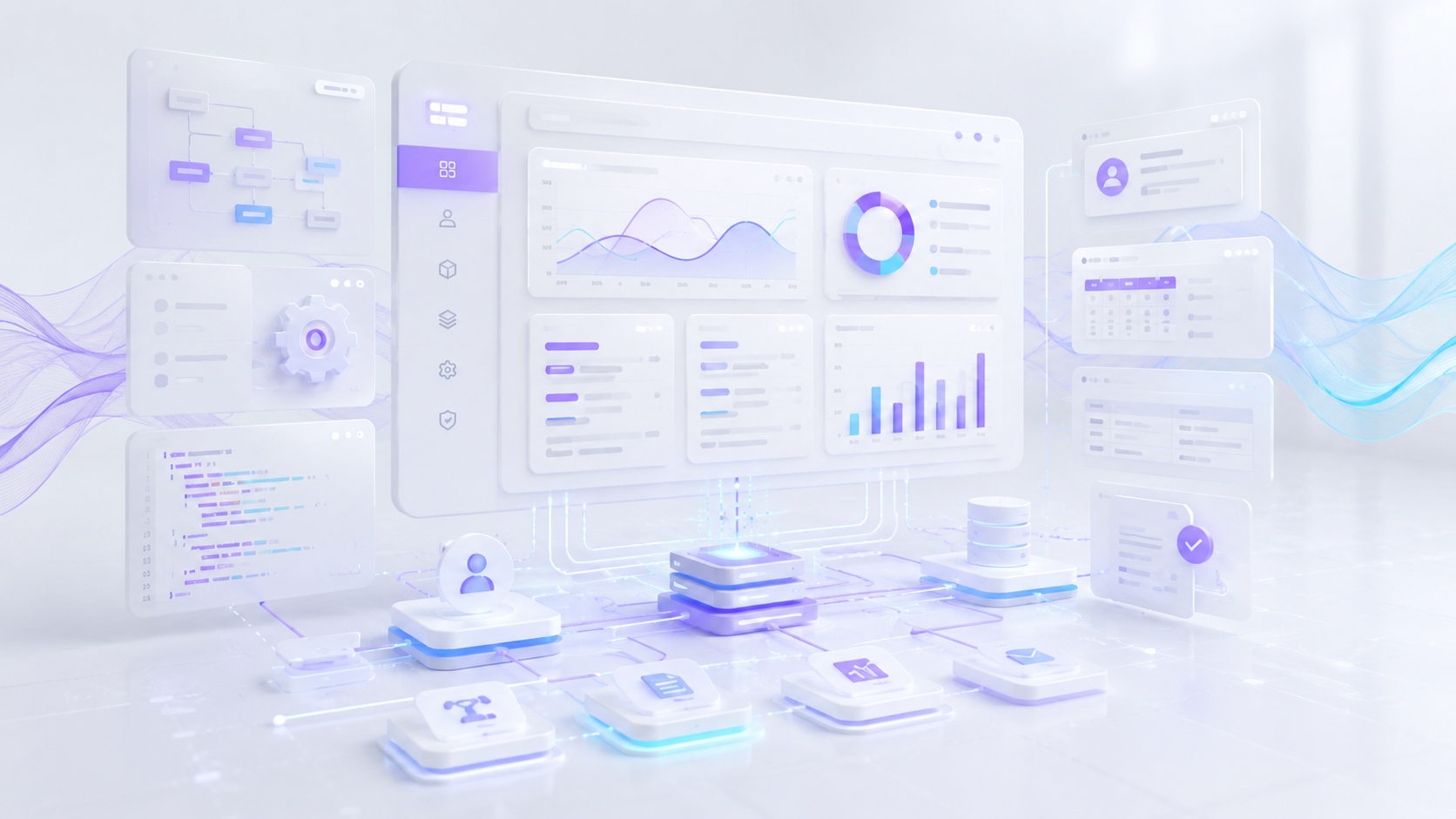
XTND contains a broad AI Factory alongside execution and communication-automation layers. Xstudios can combine the relevant pieces into practical flows for documents, messages, support, internal knowledge, operations and integrations.
Assemble task-specific context from selected files, records, knowledge or data sources rather than sending every model the same prompt.
Choose models and providers around capability, cost and task requirements instead of coupling the workflow to one provider.
Use agent profiles and controlled tools where multi-step tasks need more than a single model response.
Design communication automation around messages, sources, queues, policies, webhooks and delivery events.
Workflow automationTrack tasks, attempts, workers, logs, artifacts and policies for automations that need operational visibility.
ExecutionsKeep approvals, escalation and review points where business risk or quality requires a person to remain accountable.
Xstudios translates the XTND platform model into a scoped solution with explicit ownership, integrations, acceptance criteria and production responsibilities.
The useful question is where people are losing time reading, classifying, copying, searching, summarizing or coordinating information—and whether a model can improve that step without creating unacceptable risk.
Xstudios maps the workflow first, then selects the smallest combination of retrieval, model calls, rules, tools, queues and human review that can improve it. This also makes cost and failure behavior easier to understand than an open-ended “AI agent” project.
Smart Relay and several AI/automation areas have broad architecture with different implementation maturity. We sell scoped outcomes and tested workflows, not a blanket promise that every internal AI module is a finished product.
The exact phases change with the project, but we keep the delivery model explicit so reusable platform depth does not become an opaque dependency.
Identify the classification, extraction, search, drafting or coordination step worth improving.
Provide controlled context, retrieval and instructions appropriate to the task.
Add APIs, queues, notifications or system updates behind explicit permissions.
Track cost, quality, errors, escalation and real time saved before expanding automation.
Availability and implementation depth are confirmed against the actual project scope and current XTND capability maturity.
The architecture is designed around provider/model choice rather than assuming one model is correct for every task. Project-specific availability and provider requirements are confirmed during design.
It can be designed to use selected internal sources through controlled ingestion or retrieval, with access boundaries and data handling defined for the project.
Yes. Human approval and escalation points are an important pattern for higher-risk workflows.
We can design agentic workflows where they are justified, but we prefer bounded tasks, explicit tools, observable execution and clear failure handling over autonomy for its own sake.
Xstudios can map your requirements against the current XTND platform, identify what is reusable today and define where custom engineering or external systems remain the better choice.